Lumière Hair Clinic · Hair loss
Crown thinning
The swirl at the back, thinning where you can't see it yourself.

The Procedural Physician
Dr Kristy Truong
US fellowship-trained
AHPRA MED0002351485
Hair assessment with Dr Kristy Truong — 45 minutes, $250, redeemable against treatment within 30 days.
- Doctor-run · A physician assesses you first
- Diagnosis first
- Inside a medical centre · Discreet by design
Prefer to talk first?
Request a callback — we'll call you within one business day.
Or call 08 6388 4474·Book online →
Who to see
The Procedural Physician
Dr Kristy Truong
Advanced Aesthetic Procedures & Hair Transplants
Dr Kristy Truong leads the clinical practice at Lumière.
View profileWhat can realistically be done
Diagnosis and staging
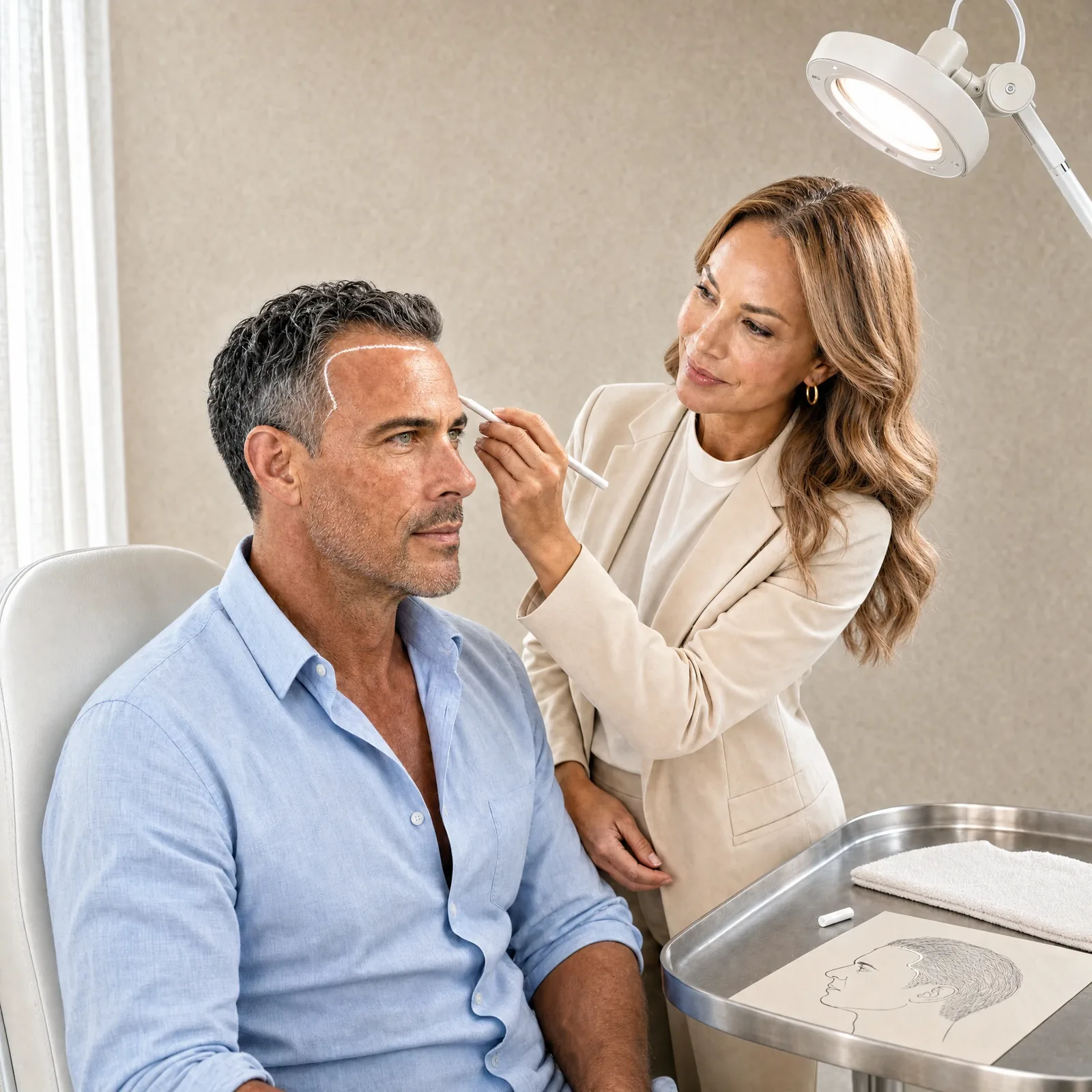
Confirm pattern loss, grade the crown honestly, and photograph it for your record — most men have never seen their own crown properly.
Medical treatment first
Crown follicles that are miniaturising but alive respond best of all to prescription treatment — priced in consultation.
Regenerative scalp treatment
PRP or PRF to support existing follicles, delivered as a course.
Transplant planning, budgeted carefully
Where a transplant is right, the crown is planned for impression under light rather than density, keeping donor hair in reserve for the hairline and for the future.
What can't
The crown is where graft supply runs out first. A crown transplanted generously at thirty can leave nothing for a hairline at forty — which is why we plan it last, conservatively, and often after medical treatment has done its work.
What's going on
Crown thinning is often the last pattern a man notices and the first everyone behind him does. Because the vertex grows in a swirl, thinning there reads as a widening circle of scalp under overhead light — and because you cannot see it in a mirror, it is usually pointed out, photographed, or discovered by accident.
The crown behaves differently from the hairline. It consumes grafts quickly because of its surface area and the angles its hair grows in, so it is the area where planning for impression rather than density matters most — and where medical treatment first does the most good, because crown follicles often remain alive long after they have thinned.
Why it happens
- Genetic sensitivity to DHT, following the family pattern
- The swirl pattern making thinning visible earlier than the hair count suggests
- Age — progressive without treatment
- Occasionally compounded by scalp conditions or medication
What a first visit involves
- Your history and what's bothering you, in your words
- An examination and an honest plan, with costs in writing
- No treatment at a first visit
Hair assessment with Dr Kristy Truong — 45 minutes, $250, redeemable against treatment within 30 days.
What to expectQuestions
Where to go next
Considering treatment? Start with a hair assessment — diagnosis first, then the right treatment, which is not always a transplant. Book an assessment
Book an assessment
Diagnosis first. Then the right treatment — which is not always a transplant.